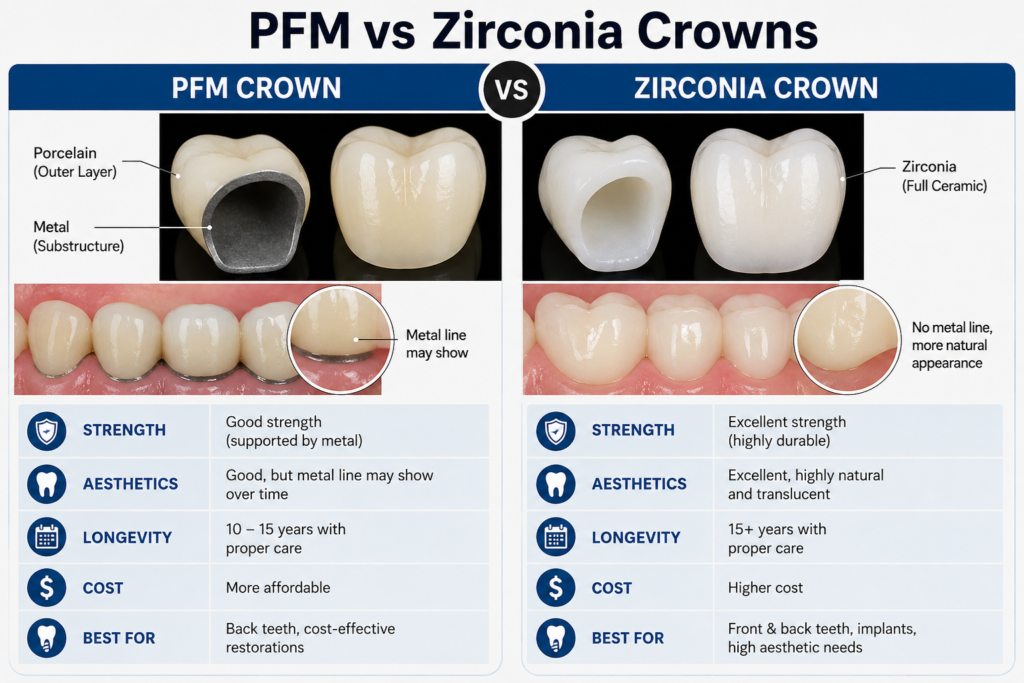
Dental crowns are among the most common restorative treatments used to repair damaged, weakened, or severely decayed teeth. Among the various crown materials available today, Porcelain-Fused-to-Metal (PFM) and Zirconia crowns are two of the most popular choices. While both offer excellent functionality, they differ significantly in terms of strength, aesthetics, durability, and overall patient satisfaction. Lets see which one you should use PFM vs Zirconia?
If you’re wondering which option is best for your dental restoration, this guide will help you understand the key differences between PFM and Zirconia crowns.
What are PFM crowns?
PFM (Porcelain-Fused-to-Metal) crowns consist of a metal substructure covered by a layer of porcelain. The metal framework provides strength, while the porcelain layer mimics the appearance of a natural tooth.For decades, PFM crowns have been considered the gold standard in restorative dentistry due to their reliability and cost-effectiveness.
Advantages of PFM Crowns
1.Strong metal framework offers good durability.
2.Suitable for both front and back teeth.
3.More affordable than some all-ceramic options.
4.Long clinical history with proven success.
Disadvantages of PFM Crowns
1.Metal may become visible as a dark line near the gum margin over time.
2.Porcelain can chip or fracture under heavy biting forces.
3.Less translucent compared to natural teeth.
4.May cause aesthetic concerns in highly visible areas.
What are Zirconia Crowns?
Zirconia crowns are made from zirconium dioxide, an advanced ceramic material known for its exceptional strength and biocompatibility. Modern CAD/CAM technology enables the fabrication of highly precise zirconia restorations.Over the past decade, zirconia has become one of the most preferred crown materials among dentists and patients alike.
Advantages of Zirconia Crowns
1.strong and fracture-resistant.
2.Excellent biocompatibility with surrounding tissues.
3.Metal-free construction eliminates dark gum lines.
4.Highly aesthetic, especially with multilayer zirconia.
5.Suitable for crowns, bridges, and implant restorations.
Disadvantages of Zirconia Crowns
1.May be slightly more expensive than traditional PFM crowns.
2.Older generations of zirconia appeared more opaque.
3.Requires precise adjustment and polishing during placement.
Comparing Strength
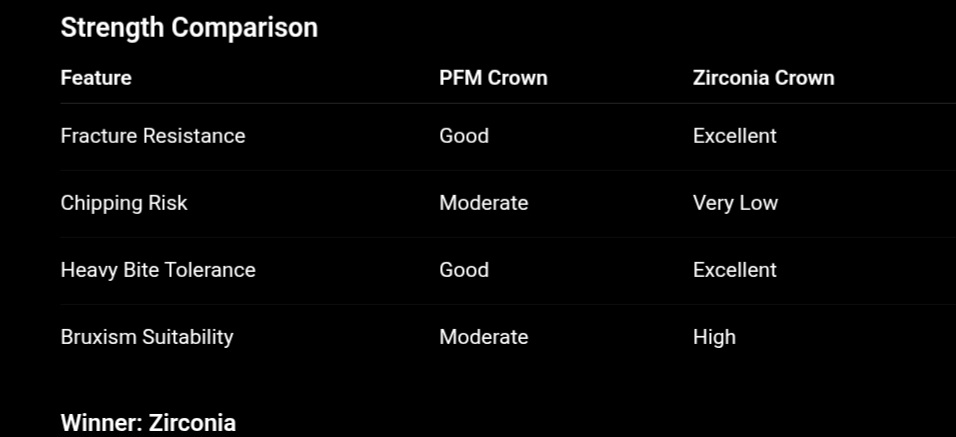
When it comes to strength, zirconia is generally the winner.
PFM crowns derive their strength from the underlying metal framework, making them reliable for long-term use. However, the porcelain layer remains vulnerable to chipping.
Zirconia crowns are fabricated from a single high-strength ceramic material that can withstand substantial chewing forces. This makes them especially suitable for posterior teeth and patients who grind their teeth.
Comparing Aesthetics
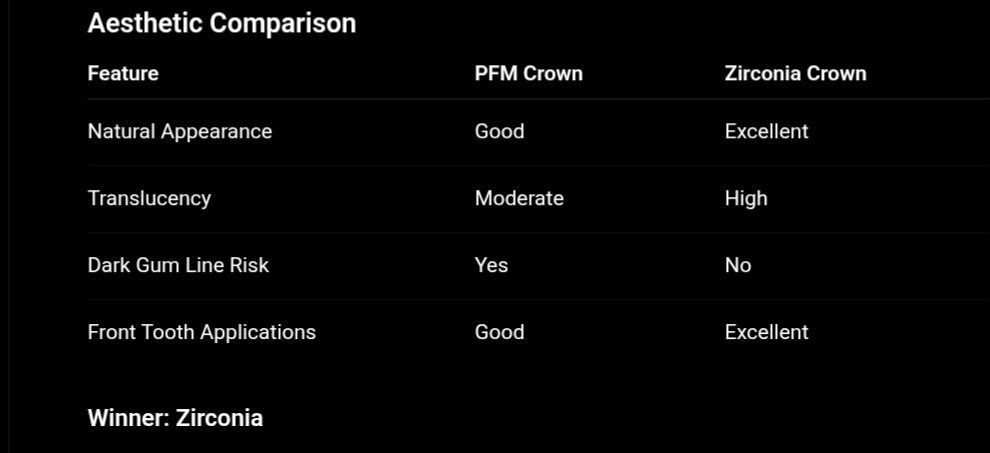
Modern zirconia crowns, particularly multilayer and translucent zirconia, closely mimic the appearance of natural enamel. They provide superior translucency, color matching, and lifelike aesthetics.
Comparing Longevity
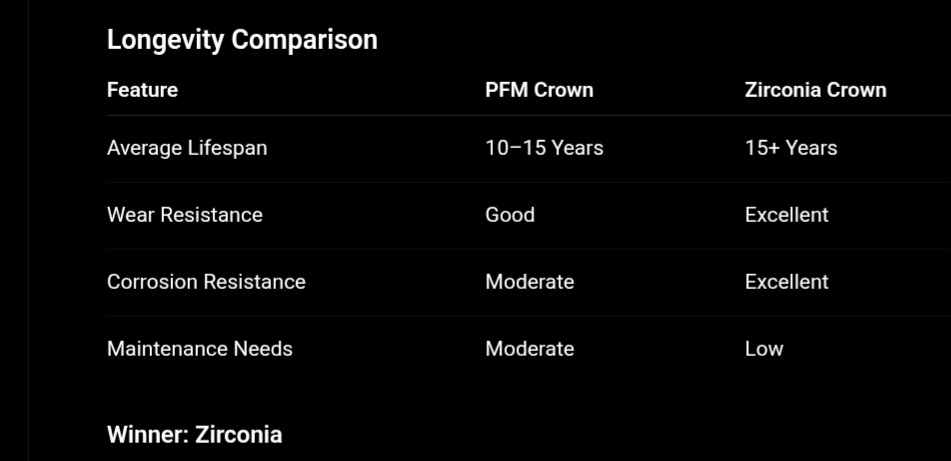
Both PFM and zirconia crowns can last many years when properly maintained.
PFM crowns typically have a lifespan of 10–15 years or more. However, porcelain chipping and metal exposure may require replacement over time.
Zirconia crowns are highly resistant to wear, fractures, and corrosion. Many studies indicate excellent long-term performance, with some restorations lasting well beyond 15 years.
Which Crown Is Better for Different Situations?
Choose PFM Crowns If:
Budget is a primary concern.
Restoration is in a less visible area.
A proven and economical solution is preferred.
Choose Zirconia Crowns If:
You want the most natural appearance possible.
You need maximum strength and durability.
You have metal sensitivities.
You are restoring implants, bridges, or heavily loaded teeth.
Long-term aesthetics are important.
Final Verdict
Both PFM and zirconia crowns are effective restorative options that can restore function and appearance to damaged teeth.
However, advancements in dental materials have made zirconia the preferred choice for many modern dental restorations.Zirconia crowns offer superior strength, outstanding aesthetics, excellent biocompatibility, and remarkable longevity.
While PFM crowns remain a reliable and cost-effective solution, zirconia crowns generally provide a more natural-looking and durable restoration.For patients seeking the best combination of strength, aesthetics, and long-term performance, zirconia crowns are often the clear winner. Consulting with your dentist or dental laboratory can help determine which option best suits your clinical and cosmetic appeareance.
content by wikipedia