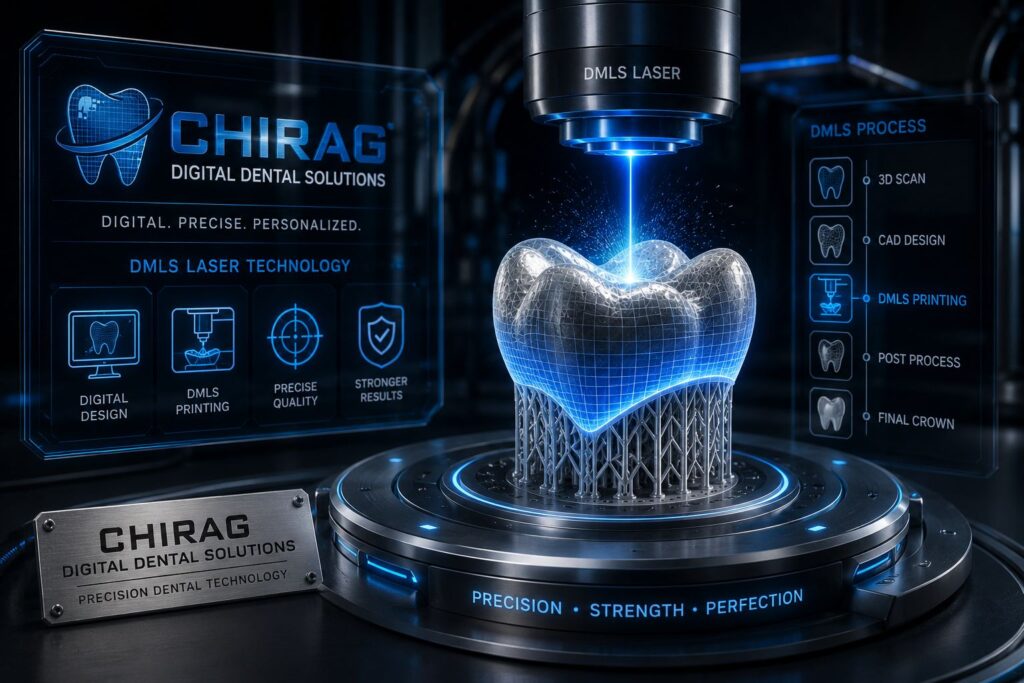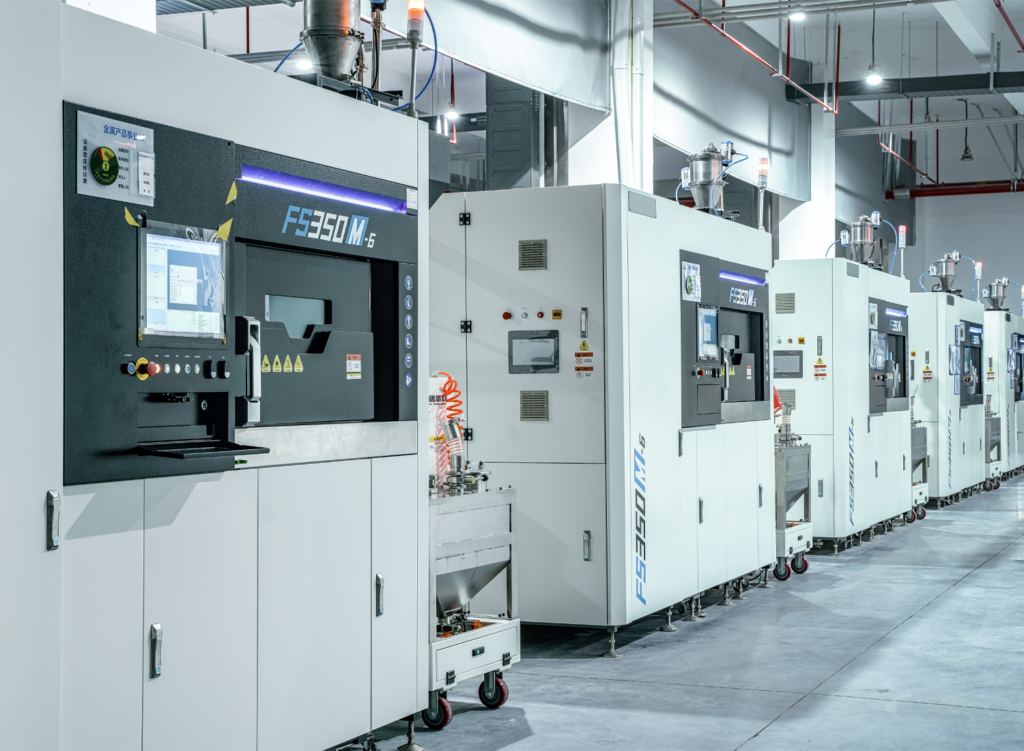
A silent, metallic revolution is taking place in the manufacturing sector. For decades, classic subtractive manufacturing—milling, turning, and drilling blocks of raw material—governed industrial output. These techniques have long been limited by geometric constraints, material waste, and long lead times, despite their great reliability. Direct Metal Laser Sintering (DMLS) is a cutting-edge industrial 3D printing technique that is quickly evolving from a specialized tool for prototype to a fundamental component of next-generation production.DMLS is revolutionizing design, supply chain logistics, and material efficiency in the world’s most demanding industries by producing intricate metal components layer by layer straight from digital CAD files.
Understanding the Alchemy of DMLS
At its core, DMLS is a powder-bed fusion technology. Unlike standard desktop 3D printers that melt plastic filaments, a DMLS machine operates in a highly controlled, industrial environment to manipulate fine metal powders.
The process unfolds in a series of precise, repetitive steps:[CAD Design] ➔ [Apply Thin Powder Layer] ➔ [Laser Sintering] ➔ [Lower Build Plate] ➔ [Repeat]
The Chamber Setup: The printing environment is sealed and flooded with an inert gas, typically argon or nitrogen. This removes oxygen to prevent the heated metal from oxidizing or catching fire.Powder Distribution: A recoater blade spreads an incredibly thin, uniform layer of metal powder—often between 20 and 40 microns thick—across the build platform.Laser Sintering: A high-powered ytterbium fiber laser directs a precise beam onto the powder bed. Guided by the 3D CAD model, the laser traces the cross-section of the part, heating the metal particles just enough so that they fuse together at a molecular level without fully liquefying.Layer Iteration: The build platform lowers by the thickness of one layer, a new layer of powder is swept across the surface, and the laser sinters the next cross-section.This cycle repeats thousands of times until a fully formed, dense metal component emerges from the powder bed.
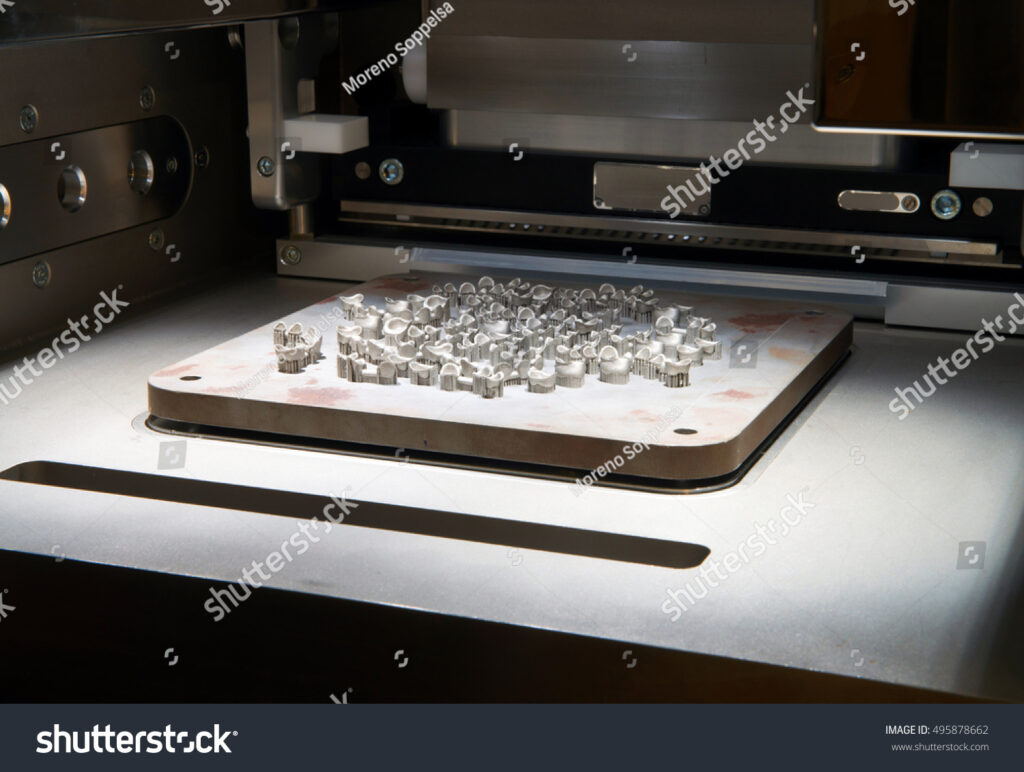
Breaking Free from Design Constraints
The most profound impact of DMLS is the liberation of design engineering. Traditional manufacturing enforces a strict discipline: parts must be shaped so that cutting tools can reach them, or molds can release them. DMLS completely bypasses these physical restrictions.
Lightweighting and Topology Optimization
In fields like aerospace and automotive, weight equals cost. DMLS allows engineers to use topology optimization software, which calculates exactly where material is structurally required and removes the rest. The result is organic, lattice-like structures that mimic the internal geometry of bones. These parts are often 40% to 60% lighter than their machined counterparts while maintaining identical structural integrity.
Consolidating Assemblies
Traditional manufacturing often requires making dozens of separate pieces and fastening, welding, or brazing them together. Every joint represents a potential point of failure and adds weight. DMLS can print a massive, complex assembly—such as an entire fuel injector or a cooling manifold—as a single, monolithic component. This eliminates assembly labor, reduces part counts, and radically simplifies quality control.
Internal Channels
With DMLS, engineers can design curved, conformal cooling channels inside a part that would be impossible to drill using traditional machinery. This is a game-changer for injection molding tools and high-performance engines, where optimized heat dissipation dramatically extends part lifespans and efficiency.
Medical and Dental Implants
Human bodies do not come in standard sizes. DMLS allows medical professionals to take patient CT scans and print custom titanium cranial plates, hip stems, or spinal cages tailored perfectly to the patient’s anatomy. Furthermore, DMLS can deliberately print a rough, porous surface texture that encourages natural bone growth into the implant, a process known as osseointegration.
MATERIALS: The Industrial Spectrum
The success of DMLS relies heavily on the evolution of its metallurgy. Today’s industrial machines print using an expansive catalog of high-performance engineering alloys, each tailored to specific environmental demands:
Titanium (Ti64): Highly prized for its exceptional strength-to-weight ratio and excellent biocompatibility, making it the gold standard for aerospace and medical implants.
Inconel (625 or 718): A nickel-chromium superalloy capable of withstanding extreme temperatures and corrosive environments, frequently deployed in rocket engines and gas turbines.
Stainless Steel (316L or 17-4 PH): Offers high tensile strength, ductility, and excellent corrosion resistance, ideal for marine, medical, and general industrial applications.
Cobalt-Chrome (CoCr): Highly wear-resistant and biocompatible, frequently used for long-lasting joint replacements and dental prosthetics.
Aluminum (AlSi10Mg): Provides a good mix of casting properties, lightweight profile, and high thermal conductivity for automotive components.